The ICT sector impacts the global greenhouse gas emission for 3%
We need to consider the life cycle of electronic products, from raw material extraction to end of life (waste). Currently, it is not possible to recycle completely an electronic product
Trend for ICT giants: +27% increase of semiconductor foundries from 2020 to 2023
Amazon does not report electricity consumption. Microsoft, and Google are at least transparent and share their data
Obviously, the demand of data centers is expected to grow in the next years
Other environmental impacts apart from Co2:
- change in biosphere integrity
- stratospheric ozone depletion
- increase in atmospheric aerosol loading
- ocean acidification
- modification of bio-geo-chemical flows
- freshwater change
- land system change (physical centers deployed somewhere impact the environment)
- climate change
- introduction of novel entities (chemical, PFAS, etc)
- change in biodiversity and ecosystem integrity
This processes are mostly interdependent, especially on climate change and biosphere integrity
Social dangers of Generative AI
AI can be used to optimize flight paths to reduce Co2 emission, and Google Maps use AI to optimize the recommended path to reduce usage of gas:
- 10:1 ratio between what you may save and what it is needed to run this LLM
- this kind of examples are used to promote a narrative that AI in intrinsically good
Digital / ICT are at the same time part of the problem and part of the solution
Is remote working good for the environment?
- a study from Orange confirmed the hypothesis
- studies are possible only at the micro scale, local level, on a per service basis
- be careful to generalizations
Koomey’s laws: the number of computations per kWh of electrical energy is doubling every 1.2-2.5 years
Training algorithms optimization to reduce environmental impact
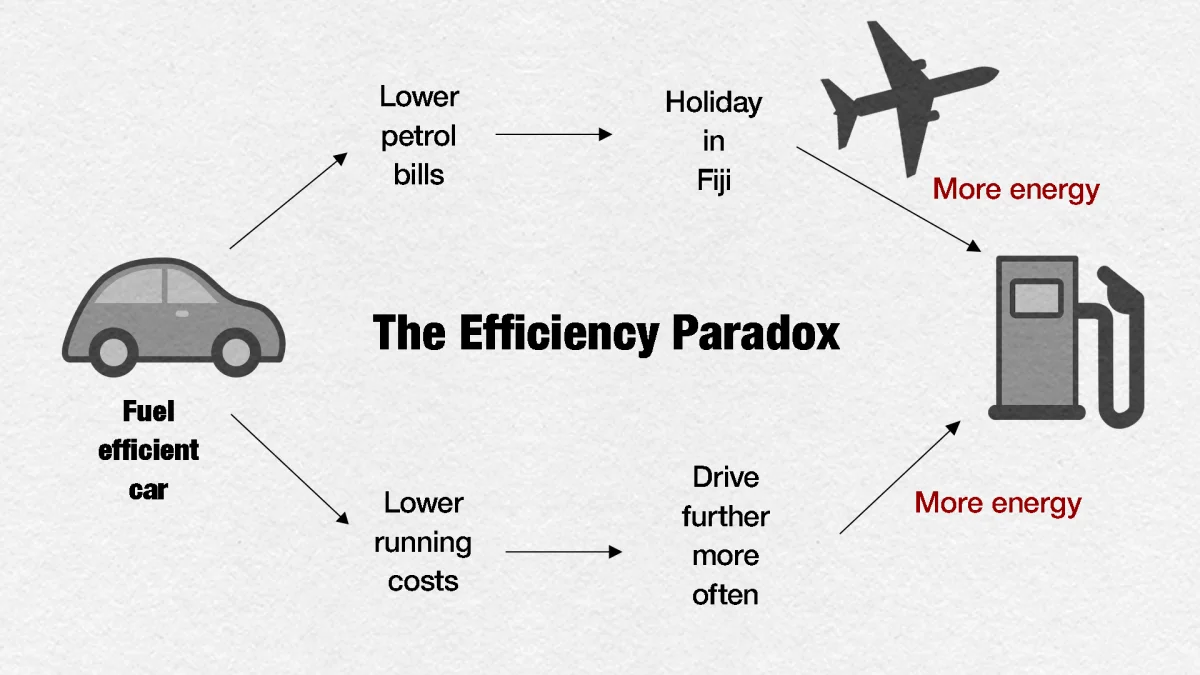
Rebound effect: reduction in expected gains from new technologies that increase the efficiency of resource use, because of behavioral or other systemic responses. These responses diminish the beneficial effects of the new technology or other measures taken
Low-hanging fruits theory: do first what is easy, and later what costs effort
- we have already achieved the “easy improvements” regarding energy consumption solutions
Depending on the model uses, a 100-word email generated by AI may consumes half a liter of water
Social consequences of GenAI
- relativism
- polarization
- spread of fake news
- based on search history, two people may have a different answer by Meta AI
- conservatism: reproducing the state of the thing, not inventing anything new
- personalized AI is more persuasive than humans
Social media are driven by user attention Generative AI are driven by intimacy with the users