Reviews
- SLR: structured/systematic literature review
- SMS: structured mapping study. More output, it analyzes the quality of the papers
- SR:
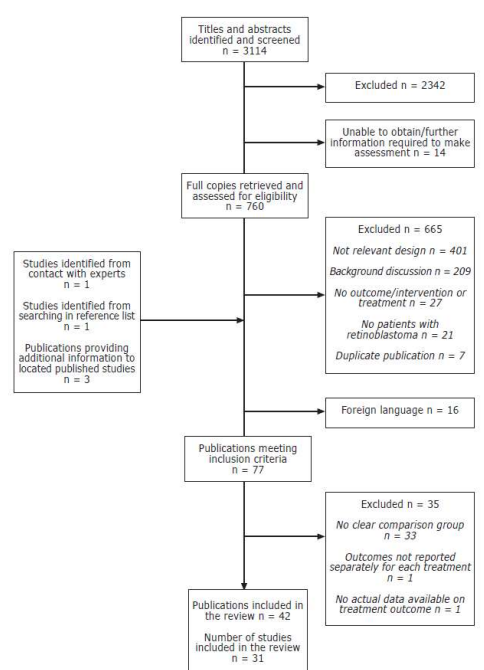
It is recommended to report the review methodology in a flowchart
SMS map chart
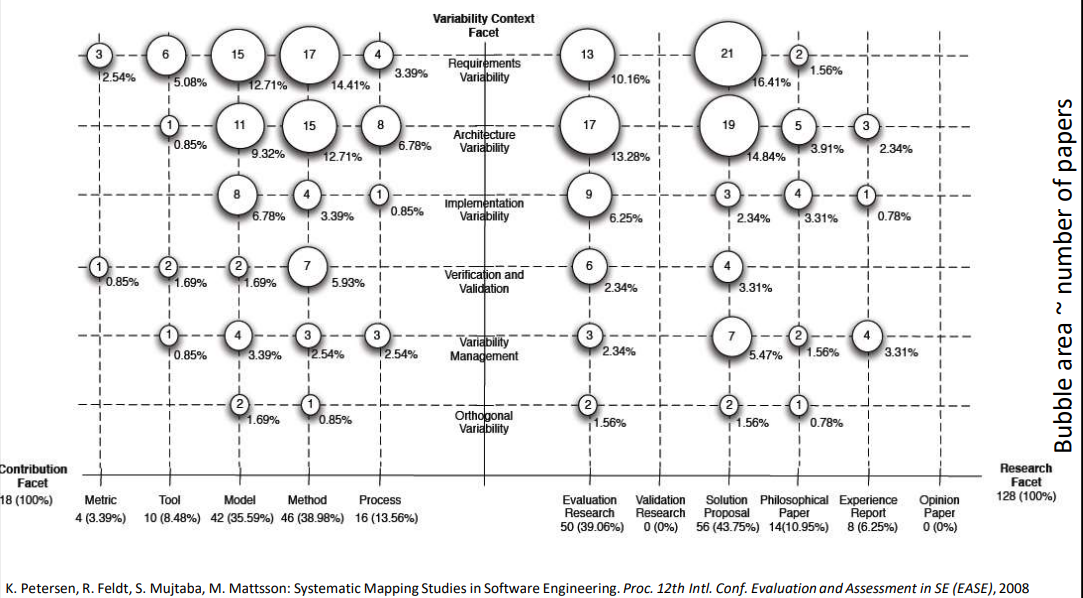
SMS assesses the quantity of the papers but does not tells too much about the quality. That’s what an SLR is helpful for
Meta-analysis: rare in SE, common in medicine
- analyzing other reviews to spot trends
CASP (Critical Appraisals Skill Program) is a checklist to assess rigor, credibility, and relevance in empirical research
Do not use RegEx in query strings in papers (it is not reliable)
https://dl.acm.org/search/advanced : select “the ACM guide to computing literature” (it will fetch material even from Springer and other relevant sources)
MSR (Mining software repository) Analyzing data stored in software repositories
- mining: extracting knowledge (meaningful patterns, trends)
- combine SE and data science to get relevant information
Types of repo
- version control systems
- issue trackers (Jira, Bugzilla)
- code review systems (Gerrit, Phabricator)
- communication logs (mailing lists, Slack)
- knowledge websites
Mining tools:
- PyDriller
- repositories APIs
Clean your data that can skew the results
Replicability
- you store your results (so everyone can replicate your analysis on the dataset)
- you define commits intervals so that everyone can fetch the same repo at the same state
Exercise
- a proposal of MSR
- define data source to mine
- clarify inclusion criteria
- describe how would you analyze the data
- discuss threats and limitations
- describe how would you present the results