Definition
Paywalls are a broad term for monetization systems where visitors are charged subscription fees to access site content, sometimes after being able to sample a small amount of content for free.
The upsides of paywall systems:
- they promise to enable the continued creation of high-quality content
Risks and implications of walled web:
- reducing societal access to news and information
- privacy harms of the increased user tracking needed to enforce paywalls (the engagement of the user with the platform is tracked: how much time the user spend on the platform, how many article he reads, etc)
- paywall may introduce a class system on the web, where high-quality content is reserved to rich people
Google, Facebook and Apple, build platforms to provide or support paywall services
Types of paywalls
Hard paywalls: the subscription is required before visitor can access the content (e.g., Netflix business model)
Soft or metered paywalls: a freemium business model is implemented, where free contents are combined with premium content, or where all the content is available but for a short amount of time
- in most of these scenario, a JavaScript snippet measure either the number of articles a user has accessed or the time a user spends in browsing the website's content
Paywall prevalence and distribution
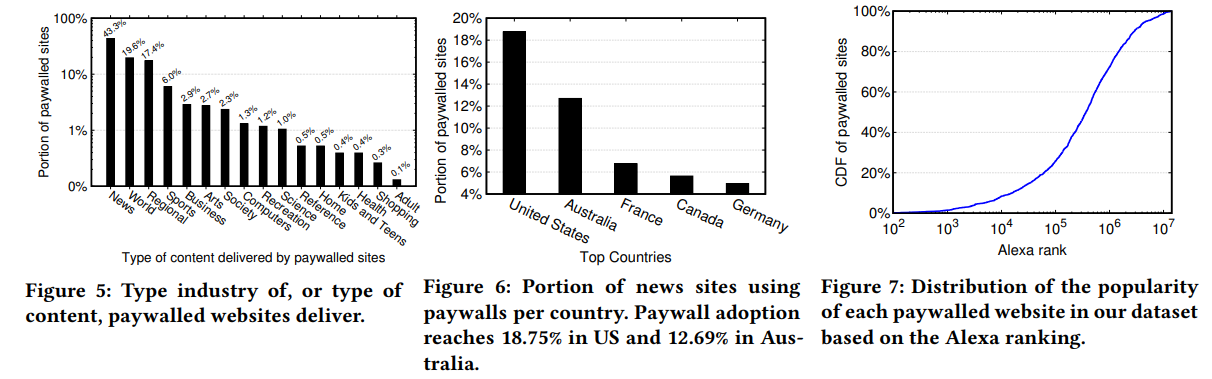
- Site types: news content (80.3%)
- Country: US, Australia, France, Canada, Germany (the most expensive paywalls are also in Germany)
- Popularity of paywalled-websites: only 8.54% of paywall-using sites are among the 10,000 most popular sites on the web
Paywall providers: risks of a monopoly
A significant number of sites rely on third-parties for their paywall implementation. Most popular paywall-as-a-service: Piano (23.5%) and Tecnavia (21%). This monopoly is significant because:
- affect amount of income content-makers can receive
- make large scale bypass easier
- privacy implication in having a small number of providers tracking users
Prevalence of paywalls types:
- soft paywalls (66.7%)
- hard paywalls (15.6%)
- hybrid approach (16.6%): machine learning is used to classify an article as locked, or not
Enforcement mechanism
- truncating article text
- obfuscating the article with popups
- redirecting users to a subscription page (less frequent, 7.3%)
Effects on the UX Users view less pages on paywalled sites, stay for shorter periods of time and link to pages less. Interestingly, we did not see a significantly difference to the bounce rate between paywalled and non-paywalled sites
Paywalls
People do not generally receive a tracker free version of site content when paying for subscriptions. Instead, paywall systems seem to serve as an additional monetization mechanism on top of existing, privacy harming, ad systems